Humane Slaughter Association

Frequently Asked Questions


The HSA always aims to provide accurate and up-to-date information and would be grateful to be notified if you think any amendments are required.


Section 1: Questions of general interest

The questions and answers below provide principal information about the meat supply chain and how livestock are transported and slaughtered for food. They also help explain how legislation and modern methods of stunning and slaughter work to protect the welfare of animals during transport, marketing and slaughter.
 
Q 1. How many animals are slaughtered in the UK?
Q 2. Which laws protect animals during transport, at livestock markets and at slaughter?
Q 3. How can slaughter be humane?
Q 4. Who monitors abattoirs/slaughterhouses/processing plants to make sure animals are slaughtered humanely?
Q 5. How can I know that the meat I buy in supermarkets or at the butchers has come from an animal that was slaughtered humanely?
Q 6. Are there any food assurance schemes in the UK which guarantee good welfare standards at slaughter?
Q 7. How are cattle slaughtered?
Q 8. How are sheep slaughtered?
Q 9. How are pigs slaughtered?
Q 10. How are poultry slaughtered?
Q 11. How are fish slaughtered? What are the humane ways of slaughtering fish?

Q 1. How many animals are slaughtered in the UK?

A 1. Every year in the UK approximately 3 million cattle, 13 million pigs, 19 million sheep and lambs, 70 million fish and 800 million birds are slaughtered for human consumption. Animals should always be reared, transported and slaughtered humanely.

return to list of questions


Q 2. Which laws protect animals during transport, at livestock markets and at slaughter?

A 2. As an interested consumer it is important to have an understanding of how EU and UK legislation protects and regulates the welfare of food animals beyond the farm gate. 

The Government is responsible for enforcing legislation. The European Union legislates either thorough Directives or Regulations. Directives may give Member States greater flexibility to enforce higher standards within their own country, but all Member States must enforce the minimum requirements laid down in the Directive. However, it can take several years for the Member States to enact the Directive into their national legislation. Regulations are directly enforceable in all Member States immediately that they become law, although there may be provision for Member States to impose higher standards through national legislation. The Defra website provides further details and full access to all the laws mentioned below at http://www.defra.gov.uk/food-farm/animals/welfare/.

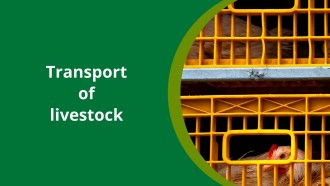
EU Council Regulation (EC) No. 1/2005 on the protection of animals during transport and related operations sets out the requirements for the humane transport of livestock, for example to slaughterhouses, for export abroad or when traveling to livestock markets. In addition in the UK farmed animals are protected by the Welfare of Animals (Transport) Orders (2006/07) for England, Scotland, Wales and Northern Ireland. Animals be must fit for the proposed journey and must be transported in such a way that avoids any suffering or infliction of injury. If the journey distance exceeds 65km, drivers are required to hold a certificate of competence.


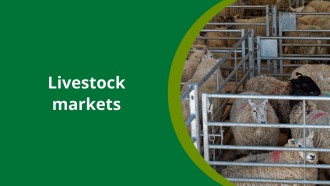
In the UK animals being sold through livestock markets are protected by the Welfare of Animals at Markets Order (1990) and The Welfare of Horses at Markets (and Other Places of Sale) Order (1990). This legislation lays down rules to ensure that all livestock passing through markets are treated humanely. The order enforces provisions for animal handling by trained and competent stockmen, specificatons for facilities and equipment and procedures for dealing with casualty animals. 

Follow this link to purchase the HSA Guidance Notes on ‘Humane Handling of Livestock’ which provides guidance on the humane handling of animals on farm, in markets, during loading and unloading for transport and up to the point of slaughter.

http://www.hsa.org.uk/Publications/Guidance%20Notes.html

EU Directive 93/119/EC protects animals at the time of slaughter or killing and is implemented in Great Britain by the Welfare of Animals (Slaughter or Killing) Regulations (1995) as amended. Animals bred or kept for the production of meat, skin, fur or other products must be spared any avoidable excitement, pain or suffering during movement, lairaging (keeping animals in stalls, pens, covered areas or fields at a slaughterhouse before they are slaughtered), restraint, stunning, slaughter or killing. The EU Commission is currently consulting on proposals for a new Regulation to replace the Directive with the aim of improving the welfare of animals at slaughter.

return to list of questions


Q 3. How can slaughter be humane?

A 3. Slaughter can be humane if an animal is protected from avoidable excitement, pain or suffering. To achieve this, the animal must be effectively restrained and then stunned, rendering it insensible to pain, and finally bled rapidly and profusely to ensure death before recovery could occur. If a stunning method does not cause instantaneous insensibility, the stunning must be non-aversive (ie must not cause fear, pain or other unpleasant feelings) to the animal.

Humane slaughter relies on multiple processes; hauliers, operators, stockmen, slaughtermen and equipment must work to their optimum, and in accordance with legislation, in order to ensure high welfare throughout the slaughter chain.

return to list of questions


Q 4. Who monitors abattoirs/slaughterhouses/processing plants to make sure animals are slaughtered humanely?

A 4. The Meat Hygiene Service (MHS) is responsible for ensuring legislative compliance with animal health and welfare controls in licenced fresh meat premises within Great Britain. The MHS is an executive agency of the Food Standards Agency and employs Official Veterinarians (OVs) and Meat Inspectors to ensure slaughterhouse compliance with meat hygiene, animal welfare and other statutory rules.

OVs take preventative and corrective actions to ensure compliance, these may include verbal or written non-compliance notices and warnings and, when necessary, recommendations for prosecution. If OVs witness animals arriving at a slaughterhouse showing evidence of poor welfare arising on farm or during transport, they will report the incident to the appropriate enforcement body which will take the necessary investigative action.

Major retailers usually require their suppliers to comply with detailed welfare standards specified by the retailers themselves, and employ independent auditors to ensure that their suppliers adhere to these specific welfare standards.

return to list of questions


Q 5. How can I know that the meat I buy in supermarkets or at the butchers has come from an animal that was slaughtered humanely?

A 5. All animals slaughtered in approved slaughterhouses in the UK should have been treated humanely, in accordance with legislation, retailer standards and the welfare policy of individual plants. In addition, there are many farm assurance schemes operating within the UK that lay down animal welfare standards. Producers, hauliers and abattoirs which seek accreditation to a given scheme must comply with these standards. Retailers frequently specify their own welfare standards to which all their suppliers must adhere. Increasing numbersof consumers are concerned about the welfare of farmed livestock. If you are specifically concerned with the welfare of animals at slaughter and killing, it is worth researching retailers’ welfare policies and assurance schemes, particularly those geared towards welfare beyond the farm gate.

Details of the majority of farm assurance schemes in the UK can be found at the Defra website (http://archive.defra.gov.uk/foodfarm/food/trade/assuance/index.htm) and elsewhere, eg at the SAI Global website (http://www.saiglobal.com/Assurance/Food/). If a meat product is accredited to a scheme it should be clearly displayed on the product’s label. Ask your butcher about the accreditation of his suppliers.

return to list of questions


Q 6. Are there any food assurance schemes in the UK which guarantee good welfare standards at slaughter?

A 6. Animal welfare is usually included as an aspect of farm assurance schemes, but being accredited to a scheme does not necessarily mean that meat on sale comes from an animal whose welfare beyond the farm gate has been in line with the HSA’s recommendations for best practice. It would be advisable to research a specific scheme and find out what rules the scheme lays down for animal transport and slaughter, in order to be fully informed of the treatment of the animal whose meat you are intending to consume.

return to list of questions


Q 7. How are cattle slaughtered?

A 7. Adult cattle must be restrained in a stunning pen which is usually a solid-sided metal box with a vertical sliding door at one end to allow the animal to enter. The pen must have a device that restricts the movement of the animal’s head to permit accurate stunning. The majority of cattle in the UK are stunned with a captive-bolt pistol. Alternatively cattle are stunned using electricity or stunned and killed using electricity (by applying an electric current to the brain and heart simultaneously).

If using a captive-bolt, the slaughterman stands on a platform, in front or to one side of the pen and shoots the animal in the head between the eyes and the ears in order to accurately target the brain. The pen side then opens and the unconscious animal rolls out of the pen, is shackled by one hind leg, hoisted on to an overhead conveyor and moved to the bleed area. Here the animal is bled by the severance of all major blood vessels supplying the brain with oxygenated blood.  This causes rapid death. The animal dies from loss of blood before it makes any recovery from the percussive stun.

return to list of questions


Q 8. How are sheep slaughtered?

A 8. In large abattoirs, sheep are often mechanically carried to the stunning area in single file in a V-shaped restrainer conveyor. In small plants they are moved in groups to a pen where they are individually stunned. Sheep may be stunned using either electricity or a captive-bolt pistol. Sheep may also be stunned and killed using electricity; this is usually referred to as a head-to-back stun-kill. They are then shackled, hoisted and bled.

return to list of questions


Q 9. How are pigs slaughtered?

A 9. Pigs may be brought to the stunning point in a restrainer conveyor, or be penned in groups and stunned individually using electricity. Carbon dioxide anaesthesia is also used in a number of large abattoirs. Pigs are lowered, preferably in groups, into a chamber containing a minimum concentration of 70% carbon dioxide in air. The pigs then lose consciousness and must remain in the gas mixture until dead. The animals are then shackled by one hind leg, hoisted and bled.

return to list of questions


Q 10. How are poultry slaughtered?

A 10. Large scale processing plants slaughter poultry using electrical water baths or gas.  For electrical waterbath stunning, poultry are unloaded from their transport containers and hung by both legs onto a moving shackle line, which conveys them to the waterbath. The birds’ heads swing into the electrified water in the bath and a stunning current passes from their head, through their body, to their feet in the shackles. This causes the bird to become unconscious. The electrical parameters of the waterbath can be set to either a) only stun the birds or b) stun-kill them. To ensure all birds die, they are then bled at the neck as soon as possible after they exit the waterbath. For gas killing, poultry are conveyed through a machine which maintains an atmosphere containing proportions of gases that cause the bird to become unconscious and then die.  Some machines convey the birds through the gas in their transport containers so there is minimal handling; others unload the birds prior to entry to the controlled atmosphere machine.  Commercial smallholders who slaughter poultry on-farm use different methods (see Q 18 & Q 19). 

return to list of questions


Q 11. How are fish slaughtered? What are the humane ways of slaughtering fish?

A 11. Every year, around the world, millions of farmed fish are slaughtered for human consumption. Science supports the view that fish react to painful stimuli in a similar way to terrestrial livestock. Their welfare should be protected throughout pre-slaughter handling and they should be stunned effectively, causing instantaneous insensibility, before being bled.

Traditional methods of killing fish include asphyxiation out of water, exposure to carbon dioxide, exposure to very low temperatures on an ice bed and bleeding without stunning. These procedures take several minutes to induce insensibility and are not humane.

Electrical and percussive stunning methods for fish are now becoming more common. Current electrical systems include water bath stunning systems, usually based around either an enclosed pipe system, or alternatively a metal de-waterering grid followed by a conveyor belt system which passes fish through electrified water to stun them. Research has been directed at determining optimum electrical parameters for stunning different species, as tolerances vary widely. Percussive stunning of fish has been modernised with the evolution of automated percussive flow-through systems which remove the need for human intervention, and retain the fish in water until the point of stunning.

Aquaculture is an expanding industry and there has been considerable research recently to improve welfare at stunning and slaughter. The HSA plays a role in helping industry to apply this research to commercial practice.

Follow this link in order to purchase the HSA Guidance Notes on ‘Humane Harvesting of Salmon and Trout’ which provides guidance on the humane handling and killing of salmon and trout. Includes different slaughter methods used, how they can be implemented and meat quality implications of these methods.

http://www.hsa.org.uk/Publications/Guidance%20Notes.html

return to list of questions


Section 2: Questions of interest to smallholders, farmers, meat industry professionals and other interested industry bodies

These questions and answers provide greater detail about methods of stunning and slaughter, information relevant to slaughterhouses employees, livestock owners, farmers, smallholders and other interested parties.

Q 12. Where is my nearest abattoir, slaughterhouse or processing plant?
Q 13. Has the HSA published guidelines for best welfare practice in commercial plants?
Q 14. Does the HSA provide advisory and/or auditing services for commercial slaughterhouses?
Q 15. How does a captive-bolt gun work and what ammunition is suitable for each species?
Q 16. Do I need a firearms licence to use a captive-bolt device?
Q 17. Is electrical stunning humane?
Q 18. I keep a few hens and cockerels in my backyard, which I occasionally have to kill. What is the most humane method of killing my birds?
Q 19. I am a farmer/smallholder who produces poultry for sale at the farm gate, in the farm shop or for the local butcher. What is the most humane method of killing them? Do I need a slaughter licence?
Q 20. I am a smallholder with my own cattle/sheep/pigs/goats. How can I kill them humanely myself and do I need a slaughter licence to do so?
Q 21. Can a slaughterman come out to my farm and kill my animals for me?
Q 22. Which operations require me to possess a slaughter license? Where and how do I obtain one?
Q 23. What do I do in an emergency situation if my animal is injured or diseased?
Q 24. How do I organise the euthanasia (destruction) and collection of my horse if it is diseased, old or seriously injured?
Q 25. Does the HSA run animal welfare training courses? Who are these courses aimed at?
Q 26. Where can I receive training on animal welfare during transport so that I can obtain my certificate of competence?
Q 27. What are the humane ways of dispatching unwanted chicks in hatcheries?


Q 12. Where is my nearest abattoir, slaughterhouse or processing plant?

A 12. The Food Standards Agency’s website at,  http://www.food.gov.uk/foodindustry/meat/meatplantsprems/meatpremlicence provides a comprehensive list of all EU approved animal slaughterhouses and processing plants in the UK, detailing the species they are legally allowed to slaughter and their geographical location within the UK. 

If you own a bovine animal intended for human consumption, which is over 30 months (OTM) of age and was born on or after 1st August 1996, you will need to locate a slaughterhouse specifically approved to take such animals. Defra provide a list of these establishments at http://www.defra.gov.uk/animalh/bse/otm/review/guidance-otm.htm.

In these premises, special arrangements apply for the removal of vertebral columns (specified risk material) and where cattle aged over 48 months will be tested for BSE.

return to list of questions


Q 13. Has the HSA published guidelines for best welfare practice in commercial plants?
A 13. The HSA has devised a series of Best Practice Guidelines which were compiled following requests from the meat industry, farmers, assurance schemes and animal welfare organisations and are aimed to unify animal welfare standards for commercial slaughterhouses. They provide the best practice standards that will be of use to all those involved in developing and running assurance schemes and abattoir policies. The guidelines are intended for all persons responsible for animals held in places of slaughter. Advice is given throughout these documents to encourage abattoir owners and operators to strive for high standards of animal welfare. Explanatory material is provided where appropriate. Please follow this link in order to purchase copies.
http://www.hsa.org.uk/Publications/Best%20Practice%20Guidelines.html

return to list of questions


Q 14. Does the HSA provide advisory and/or auditing services for commercial slaughterhouses?

A 14. The HSA is happy to undertake visits to provide advice to slaughterhouses on animal welfare aspects and can also undertake animal welfare audits on request.  For details please (click here) or contact our technical team on 01582 831919 or via email at info@hsa.org.uk.

return to list of questions


Q 15. How does a captive-bolt gun work and what ammunition is suitable for each species?

A 15. A captive-bolt device induces instantaneous insensibility by administering a severe blow to the skull of an animal. There are two broad categories of device, penetrative and non-penetrative. Penetration of the skull is not required to induce insensibility, concussion can be caused by massive shearing forces which accelerate the brain within the skull in the absence of actual penetration of the skull or brain tissue. An effective percussive stun is characterised by immediate collapse, exaggerated tonic activity (rigid muscle tension), no rhythmic breathing, no corneal reflex and a relaxed jaw. Captive-bolt stunners may be trigger-fired or fired on contact with the animal’s head.  Captive-bolt devices are used mainly for stunning cattle, sheep and goats. Pigs are usually electrically stunned as they show exaggerated clonic activity (convulsive spasms and paddling of the legs) when percussively stunned, resulting in heath and safety issues when hoisting, bleeding or further processing the animal. Due to problems that might arise with adult pigs, it is recommended that they are stunned electrically or killed using a free-bullet humane killer or shotgun. 

Captive-bolt devices may be powered by cartridges or compressed air. Cartridges vary in strength and different strengths will be required depending on the type of stunner and size and species of animal. The amount of propellant contained in a cartridge is measured in grains. Compressed air powered devices will always be penetrative in design.

Follow this link to purchase the HSA Guidance Notes on ‘Captive-Bolt Stunning of Livestock’ which provide further details on choosing the correct ammunition and device for the animal you wish to stun, on the use of captive-bolt equipment including how it works, effective stunning, bleeding, restraint and safety.

http://www.hsa.org.uk/Publications/Guidance%20Notes.html

return to list of questions


Q 16. Do I need a firearms licence to use a captive-bolt device?
A 16. Captive-bolt stunners were de-classified from their 'section 1' firearms status in February 1998. This means that a firearms permit is no longer required for purchase, possession or use of the percussive device. However, a valid slaughter licence is required to use any captive-bolt device for the purpose of stunning livestock, except in emergency or casualty situations. Operators should be fully trained and knowledgeable regarding the positioning, firing, maintenance, ammunition and effectiveness of captive bolt stunners. It should always be remembered that captive-bolt devices are percussion stunners, not humane killers, and stunning should always be followed by immediate bleeding or pithing to ensure death.  Animals intended for consumption should not be pithed; they should be bled. 


Follow this link in order to purchase the HSA Guidance Notes on ‘Humane Killing of Livestock Using Firearms’ which provides guidance on the use of shotguns or free bullet weapons including correct gun operation, ballistics, how animals should be shot, types of equipment available, using the right ammunition, safety and maintenance.
http://www.hsa.org.uk/Publications/Guidance%20Notes.html

return to list of questions


Q 17. Is electrical stunning humane?

A 17. Electrical stunning of livestock (also known as electronarcosis) causes immediate insensibility to pain by inducing epileptic type brain activity (similar to grand mal epileptic fits in humans), disrupting normal electrical function and thereby rendering the animal unconscious. Sufficient current should be passed through the brain for a sufficient period of time at the optimum voltage, frequency and waveform to ensure insensibility.

There are two basic types of electrical stunning equipment used for sheep and pigs. In head-only stunning, hand held scissor-like tongs are placed on both sides of the animal’s head so that the brain lies between the electrodes. These must deliver sufficient electrical current through the animal’s brain to produce immediate unconsciousness.

Head-body equipment involves holding the animal is a restrainer. Electrodes are placed over the head and back, passing current through the brain and heart, simultaneously stunning the animal and causing a cardiac arrest.

Head-to-body sunning may also be used for cattle. The main difference between the two types is that head-only stunning produces a reversible stun which must immediately be followed-up by bleeding, whilst head-to-body results in an irreversible stun ie death.

Poultry are typically stunned using electrical water bath systems which apply current to the whole body of the bird from full immersion of the head in electrified water to the shackle line from which the birds are suspended. Specifically designed hand held electrical tongs used to electrically stun birds are available for use by smallholders.

Some electrical systems, in addition to stunning, also kill the animal by electrically induced cardiac arrest. The cardiac arrest may be initiated in sheep by application of a second electrode across the heart, or in birds in water bath systems by using a low frequency AC current at approximately 50Hz which causes ventricular fibrillation.

An effective electrical stun is characterised by tonic (no rhythmic breathing, animal is rigid) and clonic (gradual muscular relaxation and involuntary paddling) phase activity

Electrical equipment should always be well maintained and operated by a skilled professional and according to manufacturers instructions in order to ensure a humane stun.

Follow this link in order to purchase the HSA’s Guidance Notes on ‘Electrical Stunning of Red Meat Animals’ which provides guidance on the use of electrical stunning equipment including electrical theory, restraint, effective stunning, bleeding and safety.

http://www.hsa.org.uk/Publications/Guidance%20Notes.html

return to list of questions


Q 18. I keep a few hens and cockerels in my backyard, which I occasionally have to kill. What is the most humane method of killing my birds?

A 18. Legal methods of dispatching poultry currently include neck dislocation and decapitation. However the HSA has reservations about both methods. In the case of neck dislocation, it is difficult to consistently achieve an immediate loss of consciousness. Similarly, decapitated birds may continue to show brain activity for up to 30 seconds after the cut is applied. As such, there is potential for distress, pain and suffering. The HSA recommends that neck dislocation should only be used in emergencies or for very small numbers of birds where no better method is available. You do not require a slaughter licence to carry out neck dislocation or decapitation on the premises on which the birds were reared.

Where possible, the HSA advises the use of other more humane methods such as electrical or mechanical concussion stunning. Hand-held electrical stunners and mechanical percussive devices are available (see the HSA Practical Slaughter of Poultry – A Guide for the Small Producer booklet for details). Follow this link in order to purchase a copy http://www.hsa.org.uk/Publications/General%20Publications.html.

 When used as per the manufacturer’s instructions, these methods should cause instantaneous insensibility. They must be immediately followed up by a killing method (eg bleeding or neck dislocation) whilst the bird is unconscious. This equipment costs approximately £400 to £650. You require a slaughter licence to use this equipment if you are producing poultry for a commercial purpose. It is advisable to obtain training before using this type of equipment for any purpose, whether commercial or private.

The HSA provides one-day training courses for those who wish to learn how to use electrical stunners and percussive devices. Participants can also obtain a certificate of competence which can be used to obtain a poultry slaughter licence from the Meat Hygiene Service. For details of courses please contact the HSA at info@hsa.org.uk, on 01582 831919 or see http://www.hsa.org.uk/Training.htm.

Further details about slaughter licences can be obtained from your local Animal Health Office, which you will be able to find from Defra’s website.

return to list of questions


Q 19. I am a farmer/smallholder who produces poultry for sale at the farm gate, in the farm shop or for the local butcher. What is the most humane method of killing them? Do I need a slaughter licence?

A 19. See A 18 above.

return to list of questions


Q 20. I am a smallholder with my own cattle/sheep/pigs/goats. How can I kill them humanely myself and do I need a slaughter licence to do so?

A 20. On farm slaughter of cattle, sheep, pigs and goats is an extremely difficult option to achieve legally in terms of food hygiene and BSE controls and in terms of application of humane methods of restraint, stunningand slaughter. When slaughtering on-farm, there are a number of regulations of which you need to be aware. These are in place to safeguard animalwelfare and food safety. Issues otherthan animal welfare at market, during transport and at slaughter are beyond the HSA’s remit, but the relevant laws are listed below for your information. There are also environmental regulations (controlling the disposal of by-products) aspects of which may vary throughout the country. It is important that you check with your Local Authority before carrying out any of the tasks related to home slaughter.

  • Animal Welfare Act 2006

It is an offence to cause ‘unnecessary suffering’ to any animal.

  • The Welfare of Animals (Slaughter or Killing) Regulations 1995 (WASK ‘95).

It is an offence to cause ‘any avoidable pain, excitement or suffering to any animal’.

  • The Agriculture (Miscellaneous Provisions) Act 1968. It is an offence to cause any ‘unnecessary pain or unnecessary distress’ to an animal.
  • Council Regulation (EC) 853/2004 Laying down Specific Hygiene Rules for Food Stuffs of Animal Origin.

It is an offence to sell or to supply to another person (other than immediate family), meat that has not been slaughtered and health marked in a licensed abattoir.

This web link to the Food Standards Agency’s guidance on private slaughter will give contact details for advice on home kills: (http://www.food.gov.uk/business-industry/guidancenotes/meatregsguid/home-slaughter-livestock/livestockguidance/homekillguide.pdf).

The FSA provides guidance on the private slaughter of livestock in England.  The guidance differs slightly for Scotland (see http://www.food.gov.uk/scotland/regsscotland/regsguidscot/homeslaughterlivestockscot), Wales (http://www.food.gov.uk/business-industry/guidancenotes/meatregsguid/home-slaughter-livestock/livestockguidance/homekillguide.pdf) and Northern Ireland (see http://www.food.gov.uk/northern-ireland/niregulation/niguidancenotes/homeslaughterlivestockni). 

If you need to transport your animal from one part of the farm to another to carry out the slaughter process, then Council Regulation (EC) No 1/2005 is still relevant but only certain Articles apply.  The legislation can be viewed on Defra’s website athttp://www.defra.gov.uk/food-farm/animals/welfare/transport/

You also need to have a full understanding of legislation dealing with waste products: Regulation (EC) No. 999/2001 regarding Specified Risk Material (SRM) and Regulation (EC) No. 1774/2002 regarding Animal By-Products which covers waste disposal matters.  Defra provide guidance on their website http://www.defra.gov.uk/publications/2011/12/01/pb13688-animal-by-products-controls-111130/


Welfare at slaughter must be upheld in accordance with WASK (1995) in all situations. Likewise, EU food hygiene, transmissible spongiform encephalopathy (TSE) and specified risk material (SRM) regulations will also apply in this situation. In TSE susceptible species such as cattle, sheep and goats there is a particular issue.  SRM from all cattle must be removed, stained and disposed of appropriately and BSE testing carried out on the brain stem of cattle over 48 months of age.

Private slaughter must be humane; the animal must be appropriately restrained and stunned effectively before being bled. Legislation protecting the welfare of farmed livestock (both red meat animals and poultry) during the slaughter or killing process must be upheld ie operations must be in accordance with the Welfare of Animals (Slaughter or Killing) Regulations 1995 (as amended).  These Regulations are enforced by the Meat Hygiene Service in approved slaughterhouses. Outside approved premises the rules are enforced by Animal Health (formerly the State Veterinary Service).


It is an offence to cause or permit any avoidable excitement, pain or suffering to any animal or bird during the slaughter or killing process. Anyone carrying out private slaughter must have the knowledge and skill necessary to perform all tasks humanely and efficiently and be in accordance with the law.  Only the permitted stunning and killing methods laid down in WASK (1995) may be used. A person carrying out a home kill must be highly competent in the use of any equipment used and be confident in assessing effectiveness of stunning. In certain situations it may be necessary to possess a slaughter licence and the HSA would strongly recommend that any person involved with the handling, restraint, stunning and slaughter/killing of animals should undergo some form of training and obtain a slaughter licence to ensure the highest animal welfare standards.

Food hygiene risks, particularly in TSE susceptible species such as cattle and sheep, and health and safety issues mean that the majority of producers and smallholders opt to send their animals to a licensed slaughterhouse in order to ensure food hygiene, meat inspection and welfare at slaughter are maintained. If so desired the dressed carcase can be returned to the animal’s owner for consumption. There are also issues in complying with animal by-product regulations which make dealing with the carcase and waste blood on farm very difficult.


It is also worth considering the logistics of restraining and hoisting a large animal on farm and the cost of purchasing humane stunners such as a captive bolt device or electrical stunning tongs for what is likely to be a very small number of animals. Further information regarding home kills and associated legislation is available from the Food Standard’s Agency website or via telephone on 020 7276 8377. The HSA has produced a technical note, ‘On-Farm Slaughter of Livestock for Consumption’ which is downloadable free of charge at:
 http://www.hsa.org.uk/Resources/Publications/Technical%20Notes/TN8.pdf
This provides in depth information to help make an informed and welfare-friendly decision regarding on farm slaughter.

return to list of questions


Q 21. Can a slaughterman come out to my farm and kill my animals for me?
A 21. If you use the services of a slaughterman to slaughter your own animal (s) on farm, then consume the resulting meat you run the risk of contravening EU food hygiene regulations. This is because by law, dressed and butchered carcases cannot be supplied for consumption unless their carcass has been subject to inspection and health marking by the Meat Hygiene Service in a licenced premises. In the case of the slaughterman only killing your animal and not dressing or butchering the carcase, this may be legal, however the issue is unclear. It would be advisable to locate your nearest licensed abattoir, and arrange for your animal to be slaughtered there. You can then be assured that the animal’s welfare will be protected and the returned meat will have been inspected, health marked and butchered hygienically. It also avoids the issue of waste disposal of blood and other by-products. Please contact the Food Standards Agency on 020 7276 8377 in order to obtain advice about private slaughter of livestock.

return to list of questions


Q 22. Which operations require me to possess a slaughter license? Where and how do I obtain one?

A 22. The Welfare of Animals (Slaughter or Killing) Regulations 1995 (as amended) state that if you intend to engage in any one or more of the following operations, you must possess a valid slaughter license.

  • The restraint of an animal for the purposes of stunning, slaughtering or killing
  • The stunning, slaughter or killing of animals
  • The pithing of stunned animals
  • The assessment of effective stunning or killing
  • The shackling or hoisting of stunned animals
  • The bleeding of animals which are not dead


Exemptions from licensing exist; these operations and situations are listed below.

  • Emergency slaughter or killing, where the animal must be killed immediately to protect its welfare
  • Slaughter or killing by the owner of an animal for his private consumption (when slaughter takes place elsewhere than in a slaughterhouse or knacker's yard). See answer to question 14 above for further details.
  • Slaughter or killing for a non-commercial purpose.
  • Killing by using a free bullet in the field
  • Neck dislocation or decapitation of poultry on the farm where the birds were reared
  • Operation of automatic equipment (where the operator does not carry out any task which would otherwise require a licence)
  • Shackling birds before stunning
  • Slaughter or killing under the direction and supervision of a veterinary surgeon

A licence is not required to kill animals in the case of disease outbreak and control or to kill surplus chicks or embryos in hatcheries. However, these operations must be carried out in accordance with EU legislation (schedule 11 of WASK (1995)).


Provisional slaughter licences are issued by the regional Animal Health offices and are valid for 3 months. You must be at least 18 years old in order to obtain one and must not have been convicted of a crime contavening any animal welfare legislation. In order to locate your local office, use the Animal Health website and enter your postcode. Provisional licences are specific to species, equipment and operations.


In order to obtain a full licence, a certificate of competence must be obtained from an authorised veterinary surgeon (a Meat Hygiene Service Official Veterinary Surgeon (OV) or an Animal Health Veterinary Officer, VO) who has assessed your competence in carrying out the operations for which you are seeking a certificate, your understanding of relevant statutory requirements (including Codes of Practice), and how legislation works to protect the welfare of animals. The cost of obtaining a slaughter licence is £20, but in addition, assessment of an individual by an OV in a licensed slaughterhouse costs £40, or £70 for a visit by an OV to any other premises. The fee is payable in advance and not refundable if the applicant is unsuccessful.


Assessment is not carried out via a written examination. Usually, your practical skills will be observed during normal working conditions, or as part of an animal welfare training course designed for the purpose. The HSA regularly run such courses, please refer to our training brochure for further details. 


If you work at a licensed slaughterhouse, your assessment will usually be carried out by the OV at these premises. If you do not work in a licensed slaughterhouse you should apply to the local Animal Health Divisional Office (AHDO) for assessment by a VO at your place of work or an appropriate site. In some cases it may be possible for an OV to arrange for your assessment to be carried out within a licensed slaughterhouse.


A Registered Full Licence can be obtained from the Meat Hygiene Service and is permanent and valid throughout Great Britain.  Registered licences cost £20.00. Your registered license will cover the operations, equipment and species listed on your Certificate of Competence.

return to list of questions


Q 23. What do I do in an emergency situation if my animal is injured or diseased?

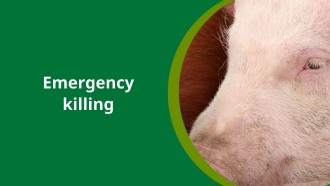
A 23. When an animal is injured, diseased, in pain or too weak to be transported or treated on-farm, destruction is the only viable option to ensure that the animal is spared avoidable pain, suffering or distress. If you are killing an animal for emergency reasons relating to the welfare of the animal, ie immediate slaughter is necessary, you do not need a slaughter licence. The HSA’s ‘Emergency Slaughter’ booklet and DVD package, follow this link http://www.hsa.org.uk/Publications/Training%20Packages.html to order a copy. The package provides detailed information and practical guidance on the humane killing of injured, diseased and non-viable livestock. You should always use the most humane method available.

return to list of questions


Q 24. How do I organise the euthanasia (destruction) and collection of my horse if it is diseased, old or seriously injured?

A 24. Follow this link (http://www.hsa.org.uk/Publications/General%20Publications.html ) to the HSA’s ‘Farewell Document’, which provides horse owners with practical advice and options for humane destruction of an old or injured horse, in both emergency and non-emergency situations.

return to list of questions


Q 25. Does the HSA run animal welfare training courses? Who are these courses aimed at?

A 25. The HSA runs welfare training courses and gives lectures for the livestock industry, smallholders and hobby farmers, enforcement agencies, veterinarians, scientists, students and other interested groups. A copy of the HSA’s training brochure is downloadable from http://www.hsa.org.uk/Training.htm. Courses can be adapted to suit specific training needs and may be delivered at any suitable venue in the UK or abroad.

return to list of questions


Q 26. Where can I receive training on animal welfare during transport so that I can obtain my certificate of competence?

A 26. Council regulation (EC) No. 1/2005 on the protection of animals during transport and related operations and the Welfare of Animals (Transport) (England) Order 2006 require that, as of 5th January 2007, livestock hauliers are trained in key knowledge areas such as fitness for travel; the means of transport; use of its facilities; loading, unloading and handling; watering and feeding intervals, journey times and rest periods; space allowances; and documentation.

From 5th January 2008, it has been EU law that any person transporting cattle, sheep, goats, pigs, horses or poultry on journeys exceeding 65km distance in connection with an economic activity must be independently assessed in their competence to do so. In order to transport livestock on journeys under 8 hours in duration, hauliers must be assessed through a theoretical test. If journey duration does exceed 8 hours, assessment must incorporate a practical competency test to assess the driver’s ability to handle livestock, drive responsibly and with consideration for the animal’s needs and to handle casualty animals.

Assessments are carried out by independent private sector bodies approved by Defra. Defra’s website (http://www.defra.gov.uk/animalh/welfare/farmed/transport/eu-transportreg.htm) provides contact details for approved awarding bodies that will arrange assessment and issue certificates of competence.

return to list of questions


Q 27. What are the humane ways of dispatching unwanted chicks in hatcheries?

A 27. Unwanted male chicks are often surplus to requirements in hatcheries and must be dealt with humanely by methods in accordance with Welfare of Animals (Slaughter or Killing) Regulations (1995) as amended. Legal methods permitted include mechanical destruction (providing that the apparatus causes instantaneous death), exposure to specific gas mixtures as detailed in WASK (1995) or neck dislocation. 

Instantaneous mechanical destruction can present a humane option if the apparatus has mechanically operated killing blades or projections with the capacity to kill all chicks immediately. Gas killing can also be a humane option if prescribed concentrations of gas are used and best practice is followed. Though permitted by law, neck dislocation is not recommended by the HSA for the routine despatch of unwanted chicks as it does not consistently cause immediate insensibility to pain.

The HSA has produced a booklet, ‘Code of Practice for the Disposal of Chicks in Hatcheries’ which can be ordered via this website http://www.hsa.org.uk/Publications/General%20Publications.html at a cost of £2.00 and gives details of humane methods available to hatchery owners, operators, veterinary surgeons or anyone wishing to know about humane options for disposal of unwanted males or deformed/diseased chicks.

return to list of questions

return to home page